

Carboxymethyl-Lysine (CML): A Core AGEs Biomarker Decoding Glycation Stress and Chronic-Disease Mechanisms


Cloud-Clone ELISA Delivers Robust Quantitative Detection for CML Related Research
HUSTON, TX, UNITED STATES, September 28, 2026 /EINPresswire.com/ -- Carboxymethyl-Lysine (CML): A Core AGEs Biomarker Decoding Glycation Stress and Chronic-Disease Mechanisms
Cloud-Clone ELISA Delivers Robust Quantitative Detection for Glycation-Related Research
Carboxymethyl-lysine (CML), the most abundant biomarker among advanced glycation end-products (AGEs), bridges glycation stress, oxidative insult and chronic inflammatory cascades linked to diabetes complications, vascular lesions and organ ageing. Researchers encounter major analytical hurdles including protein-bound target release, cross-reactivity with carboxyethyl-lysine (CEL) and pronounced matrix interference in biological specimens. Cloud-Clone’s optimised CML ELISA kit addresses these technical bottlenecks, delivering reliable quantitative measurements to support global investigations into metabolic disorders, cardiovascular injury, neurodegeneration and food-borne AGE toxicology.
Biological Background & Core Research Value of Carboxymethyl-Lysine (CML)
CML can be described as a “protein-damage signature” triggered by hyperglycaemia and biological ageing, making it a heavily investigated biomarker for senescence and metabolic disease research.
Among advanced glycation end-products (AGEs), carboxymethyl-lysine (CML) is the most abundant and widely applied signature biomarker. Unlike fluorescent AGE subtypes, CML lacks intrinsic fluorescence and accumulates broadly across multiple tissues. It originates through two independent biochemical routes: non-enzymatic glycation of proteins driven by reducing sugars, as well as lipid peroxidation pathways. Therefore CML serves as a central biomarker reflecting crosstalk between glycation stress and oxidative stress within organisms.
Under physiological homeostasis, endogenous CML remains at low baseline concentrations. Under pathological stimuli such as sustained hyperglycaemia, redox imbalance and advancing age, CML accumulates progressively. It covalently modifies lysine residues on target proteins and induces irreversible conformational changes. Modified collagen and elastin undergo persistent cross-linking, gradually causing tissue fibrosis and loss of elasticity within blood vessels, bones, skin and other organs. Meanwhile, both free and protein-bound CML are released into the extracellular microenvironment, selectively binding the cell-surface RAGE receptor and persistently activating downstream NF-κB-driven inflammatory signalling. This establishes a self-amplifying pathological loop: glycation damage provokes chronic inflammation, which in turn accelerates further AGEs generation.
(Figure 1 Caption: Molecular structure of carboxymethyl-lysine (CML))
Two major research domains for CML:
Metabolic disease and vascular injury (endocrinology and cardiovascular research) In patients with poorly-controlled diabetes, massive CML accumulation contributes to the progression of diabetic nephropathy, diabetic retinopathy, atherosclerosis and myocardial fibrosis. CML provokes endothelial injury, promotes foam-cell formation and accelerates plaque development. It acts as a key read-out for glycotoxicity and vascular-complication risk, and is widely deployed in diabetic animal-model validation as well as drug screening for hypoglycaemic and vasculoprotective candidates.
Ageing, neuroscience and tissue-damage research With advancing age, CML accumulates incrementally in skin, bone and brain tissue and drives organ senescence. Central-nervous-system CML build-up exacerbates neuroinflammation and correlates with neurodegenerative disorders including Alzheimer’s disease. Dietary-derived AGEs are absorbed via the intestinal tract into systemic circulation; exogenous CML likewise amplifies whole-body chronic inflammation, supporting research into nutritional science and dietary glycotoxin hazards. Within bone-metabolism studies, CML deposition distorts bone-matrix architecture and elevates bone fragility, which partly explains the high prevalence of osteoporosis among diabetic subjects.
Intrinsic analytical challenges for CML measurement: ① Most CML exists in protein-bound forms within biological samples; free CML represents only a minor fraction. Inadequate pre-processing prevents efficient target liberation. ② CML shares high structural homology with carboxyethyl-lysine (CEL); conventional antibodies frequently cross-recognise CEL and produce falsely elevated read-outs. ③ Serum and tissue homogenates contain large quantities of contaminating proteins, lipids and hydrolysed peptides, leading to prominent matrix interference. ④ Improper sample storage, repeated freeze-thaw cycles and high-temperature handling can artificially generate new glycation adducts and introduce experimental bias.
CML is an essential biomarker for studying diabetic complications, atherosclerosis, ageing mechanisms, neuroinflammation, bone injury and food-borne AGE safety assessment. Stable quantification of CML forms an indispensable experimental foundation for evaluating systemic glycation burden, dissecting the AGE-RAGE inflammatory axis and screening anti-glycation bioactive compounds.
Comparison of Mainstream Detection Techniques & Core Experimental Bottlenecks for CML
Due to difficulties releasing protein-bound analytes, cross-reactivity with homologous glycated products and substantial matrix effects, CML assays show variable performance across platforms. Many research teams observe significant inter-group phenotypic differences in animal models yet obtain non-significant CML quantitative results, alongside high variability among replicate samples. Four prevailing analytical approaches are compared below, together with key practical limitations.
2.1 Performance Comparison of Four Mainstream Detection Technologies
1.Liquid Chromatography-Tandem Mass Spectrometry (LC-MS/MS) Regarded as a reference-standard method with exceptional specificity, capable of precise discrimination between CML, CEL and diverse glycated peptides. Major drawbacks include high instrument acquisition and maintenance costs, labour-intensive sample workflows requiring protein hydrolysis and solid-phase extraction, long processing times and low sample throughput. It is reserved for validating small batches of critical specimens and unsuitable for large-scale animal cohorts or gradient drug-screening programmes.
2.High-Performance Liquid Chromatography (HPLC) Achieves analyte separation via chromatographic principles yet suffers moderate sensitivity and requires sample derivatisation. Its anti-interference capacity is limited for complex biological matrices. HPLC is now largely confined to food-sample analysis and sees declining adoption in basic biomedical research.
3.Immunohistochemistry Enables in-situ localisation within tissue sections but delivers only qualitative or semi-quantitative outputs. Precise concentration values cannot be acquired for statistical inter-group comparisons; it is generally applied as supplementary supporting evidence.
4.Enzyme-Linked Immunosorbent Assay (ELISA) The most cost-effective mainstream option for basic-research workflows. It operates with standard microplate readers, demands minimal sample pre-treatment and supports high-throughput testing with manageable assay timelines. Compatible with human, rat, mouse and other species, it works with serum, plasma and tissue homogenates and fits perfectly for animal-model work and large-scale pharmacodynamic screening. Commercially-available generic CML ELISA kits commonly suffer critical weaknesses: absent protein-dissociation reagents, poor antibody discrimination against CEL and insufficient matrix-interference resistance, which cause unstable measurements and false-positive outcomes.
2.2 Four Key Experimental Pain-Points for CML Quantification
Insufficient liberation of protein-bound target molecules: The vast majority of endogenous CML is covalently attached to protein-polypeptide chains. Without efficient dissociation steps, few epitopes become accessible for antibody binding, leading to systematically under-estimated concentrations.
High cross-reactivity risk from homologous glycated products: Close structural similarity between CEL and CML means poorly-selective antibodies fail to distinguish these analytes and compromise experimental reliability.
Marked matrix interference in complex specimens: Peptides, lipids and endogenous contaminating proteins present in tissue homogenates and lipaemic serum promote non-specific binding and increase coefficients of variation among technical replicates.
Artificial glycation artefacts introduced during sample preparation: Elevated temperature, prolonged hydrolysis and inappropriate storage can generate de-novo CML in-vitro and distort final measurements, imposing strict requirements for standardised laboratory handling.
Differentiated Technical Advantages of Cloud-Clone Carboxymethyl-Lysine (CML) ELISA Kit
Targeting well-known analytical barriers including inefficient release of protein-conjugated CML, cross-reactivity with glycated homologues and strong matrix effects, Cloud-Clone has comprehensively optimised its CML ELISA product through rationally-designed glycation-modified immunogens, high-selectivity antibody generation, mature competitive-ELISA workflows and optimised sample-dissociation reagents to resolve persistent CML-assay challenges.
(Figure 2 Caption: Product photograph of Cloud-Clone CML ELISA kit)
3.1 Highly Selective Target-Directed Antibodies Suppress Cross-Reactivity against CEL
Monoclonal antibodies are screened against the characteristic chemical epitopes of CML. Multiple cross-reactivity validation rounds minimise recognition of carboxyethyl-lysine (CEL), effectively eliminating false-positive signals originating from structurally-related glycated molecules and ensuring credible quantitative outputs.
3.2 Optimised Companion Dissociation Buffer Releases Protein-Bound CML
Purpose-built sample-processing reagents are supplied with the kit. Gentle dissociation liberates covalently-attached CML from host proteins without inducing artificial glycation adduct formation. This overcomes the widespread under-quantification problem observed with conventional commercial kits.
3.3 Tuned Linear Dynamic Range Accommodates Specimens with Variable Glycation Burden
Improved solid-phase coating and competitive signal-amplification yield a broad working range. The assay reliably captures low CML concentrations under mild glycation-stress conditions while measuring highly elevated levels present in severe diabetic models, reducing operational error caused by repeated serial dilution.
3.4 Multi-Species & Multi-Matrix Compatibility with Standardised High-Throughput Workflow
Validated for common laboratory species including human, rat, mouse and rabbit. Acceptable sample matrices cover serum, plasma, tissue homogenates and cell-culture supernatants. Laborious extraction-purification steps are unnecessary; samples undergo simple pre-treatment and dilution before plate loading. Break-apart 96-well microplates and pre-formulated ready-to-use reagents enable full assay completion within three hours. The kit supports both small-sample mechanistic investigations and high-volume animal-cohort screening projects.
Core Research Application Scenarios
Cloud-Clone Carboxymethyl-Lysine (CML) ELISA Kit (Cat.No. CEB977Ge) leverages high antibody specificity, efficient target dissociation and robust anti-matrix-interference performance to deliver consistent data outputs. It serves research programmes spanning endocrinology-metabolism, cardiovascular science, ageing biology, neuroscience, orthopaedics and nutritional-toxicology.
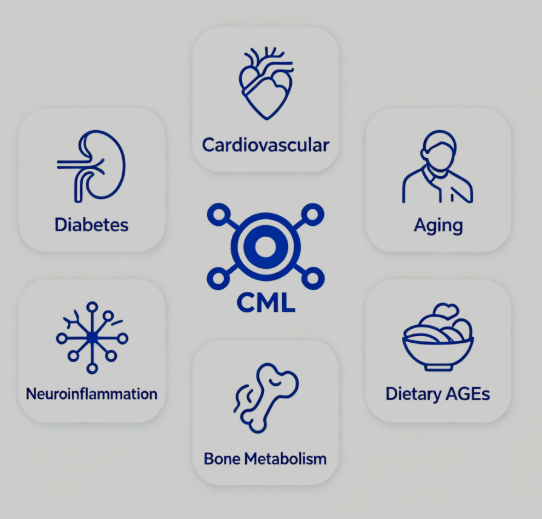
(Figure 3 Caption: Schematic diagram illustrating key research application fields for CML biomarker)
4.1 Mechanistic Research on Diabetes and its Complications
CML concentrations are quantified in serum, kidney, retina and vascular tissues from diabetic rodent models. Researchers explore mechanisms linking glycation stress to renal injury and endothelial vascular pathology, and evaluate intervention efficacy for hypoglycaemic agents and anti-glycation natural bioactive compounds.
4.2 Atherosclerosis and Cardiovascular-Disease Research
Studies investigate how CML accumulation drives vascular inflammation, plaque formation and myocardial fibrosis. Projects dissect regulatory roles of the AGE-RAGE axis in cardiovascular damage and identify prospective vasculoprotective molecular targets.
4.3 Ageing Biology and Degenerative-Disease Research
Tissue-level CML accumulation is monitored in naturally-aged and accelerated-ageing animal models to examine organ senescence triggered by chronic glycation stress. Assays support mechanistic studies of neuroinflammation and Alzheimer’s-disease-related pathology.
4.4 Bone-Metabolism Research
Research explores how CML modification alters bone-matrix collagen properties, diminishes bone toughness and contributes to diabetic osteoporosis. The kit is applied in projects examining bone-injury repair and bone-matrix ageing.
4.5 Dietary AGEs and Nutritional-Toxicology Research
Animals receive diets enriched with glycation end-products; circulating CML levels are measured to assess impacts of exogenous AGEs on systemic chronic inflammation and metabolic homeostasis, underpinning fundamental research relevant to food-safety evaluation.
As the most abundant signature advanced glycation end-product, carboxymethyl-lysine (CML) functions as a central molecular hub interconnecting hyperglycaemia, oxidative stress and chronic inflammation. It acts both as a gold-standard biomarker for whole-body glycation burden and as an effector molecule driving metabolic complications and age-associated chronic disorders.
CML measurement faces multiple intrinsic technical obstacles: predominant protein-bound analyte fractions, interference from homologous glycated adducts and complex sample matrices. LC-MS/MS suffers high operational costs and insufficient throughput; generic ELISA kits lack dedicated dissociation reagents and adequate antibody selectivity, resulting in highly variable datasets. Cloud-Clone CML ELISA kit addresses these experimental pain-points through high-specificity antibodies, specialised target-liberation formulations and multi-component matrix-shielding technology.
Supporting diverse research areas including diabetic complications, atherosclerosis, ageing biology, neuroinflammation, bone metabolism and dietary glycotoxin assessment, this product delivers stable, reproducible and high-precision quantitative data. It enables investigators worldwide to unravel molecular mechanisms and produce high-impact scientific publications. Cloud-Clone will continue advancing assay development targeting glycation-stress markers, metabolic small molecules and inflammatory biomarkers, iterating reagent performance to empower innovation across basic and translational biomedical research.
About Cloud-Clone Corp.
Cloud-Clone Corp. is dedicated to the development and production of high-quality immunoassay reagents and detection solutions. With a focus on antibody engineering, multiplex assay development, and cross-platform compatibility, the company provides research tools designed to support precision medicine and advanced biomedical investigation globally. Our core products and services include the research and development of proteins, antibodies, ELISA kits, primary cells, and multiplex cytokine assay kits, as well as professional CRO services to fully meet the diverse needs of biomedical research and related fields.
For more information about Cloud-Clone Corp, visit www.cloud-clone.com.
CLOUD-CLONE CORP.(CCC)
Tel: 001-832-538-0970, 0086-27-8425-9552
Email: mail@cloud-clone.com, sales@cloud-clone.us
Visit us on social media:
LinkedIn: https://www.linkedin.com/company/cloud-clone-corp/
Instagram: https://www.instagram.com/cloudclonecorp2023/
TickTok: https://www.tiktok.com/@cloudclonecorp2026
SuKi Duan
CLOUD-CLONE CORP.WUHAN
email us here
Visit us on social media:
LinkedIn
Instagram
TikTok
X
Legal Disclaimer:
EIN Presswire provides this news content "as is" without warranty of any kind. We do not accept any responsibility or liability for the accuracy, content, images, videos, licenses, completeness, legality, or reliability of the information contained in this article. If you have any complaints or copyright issues related to this article, kindly contact the author above.
